



How to choose a Dim Sum restaurant in Hong Kong
Ask ten Hong Kongers where to eat dim sum and you will get eleven answers, half of them contradictory and most of them fiercely held. Dim sum is not one thing. It spans century-old teahouses where trolleys still rattle between the tables, hotel dining rooms with harbour views and three-figure bills, neighbourhood shops that fill at dawn with newspaper-reading regulars, and Michelin-starred kitchens that take bookings weeks ahead. The food can be sublime or forgettable, and the gap between the two is rarely about price.
This is a guide to choosing well rather than a list of names, because the best dim sum in Hong Kong is a moving target: places change chefs, raise prices, or quietly lose their touch. Learn to read a menu, judge the signs of a good kitchen, and match the style to the occasion, and you will order confidently anywhere in the city. When you want to turn that judgement into a booking, you can browse restaurants across Hong Kong and filter by area and reviews.
Once you know what to look for, compare restaurants, cafés and bars in Hong Kong in one place.
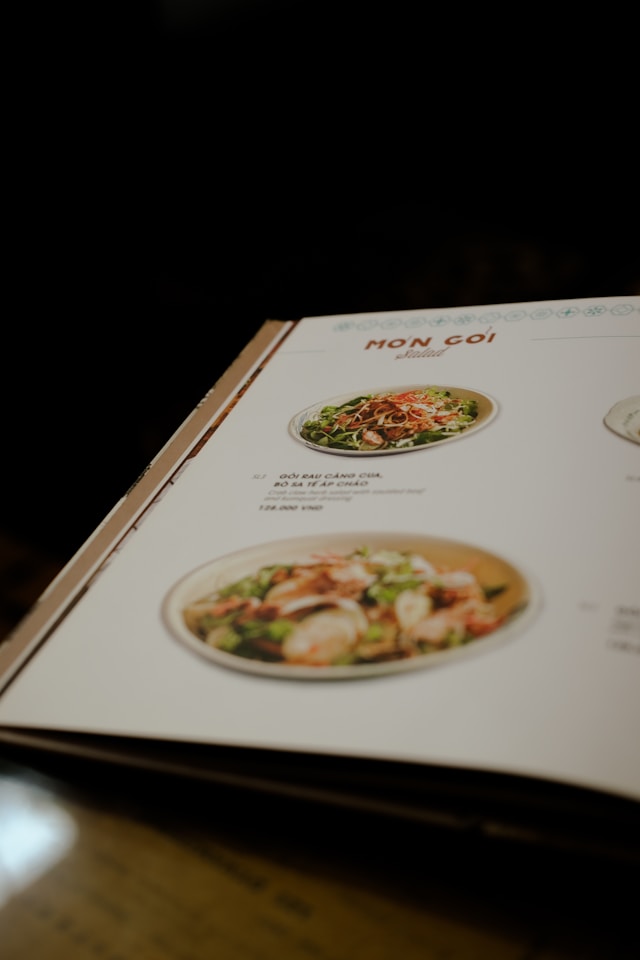
Decode the Dim Sum menu
Yum cha, literally ‘drink tea’, is the meal; dim sum, ‘touch the heart’, are the small dishes that come with it. The custom has deep roots in Cantonese teahouse culture, and the Hong Kong Tourism Board keeps a useful primer if you want the background. For ordering, it helps to know the staples and the cooking methods before you sit down.
- Har gow: translucent steamed prawn dumplings, the benchmark by which many judge a kitchen.
- Siu mai: open-topped pork and prawn dumplings, usually tipped with a little crab roe.
- Char siu bao: fluffy steamed buns filled with sweet barbecue pork; the baked version is just as common.
- Cheung fun: silky steamed rice rolls, filled with prawn, beef or a length of fried dough.
- Lo mai gai: sticky rice with chicken, steamed in a lotus leaf.
- Lo bak go: pan-fried turnip cake, savoury and lightly crisp at the edges.
- Phoenix claws: braised chicken feet in a soft black-bean sauce, a true local staple.
- Egg tarts, custard buns and sesame balls: the sweet end of the meal.
Dishes are broadly steamed, fried or baked. Steamed items show a kitchen’s precision most clearly, so they make a fair first test, while fried and baked items reward a kitchen that can balance richness without heaviness. A good order also reaches beyond dumplings: a bowl of congee, a plate of blanched greens in oyster sauce, or a portion of steamed spare ribs rounds out the table and stops the meal feeling one-note. Order a mix, and start with one or two steamed classics before branching out.
Trolley service or order by sheet?
Two service styles dominate. Trolley service, where staff wheel carts of bamboo steamers past your table and you point at what you want, is theatrical and increasingly rare; it suits a relaxed, exploratory meal where half the fun is seeing the dish before you commit. Most places now use an order sheet, where you tick boxes and the kitchen cooks to order, which usually means fresher food but less of the spectacle. Neither is better in the abstract, so choose by the experience you are after on the day.
Yum cha etiquette and tea
A few customs smooth the meal. You will be asked which tea you want, so it helps to know a handful: light, floral jasmine; earthy, dark pu’er, which locals favour with richer dishes; or roasted oolong. Tap two fingers on the table to thank whoever tops up your cup, and leave the teapot lid ajar when you want more hot water. Dishes are shared in the middle, so order in rounds rather than all at once, and do not be shy with the chilli oil and the little dishes of soy. By custom you fill other people’s cups before your own, starting with the eldest at the table, a small courtesy that says a lot about the company you keep. None of this is mandatory for visitors, but it signals that you know the room, and staff tend to respond in kind.
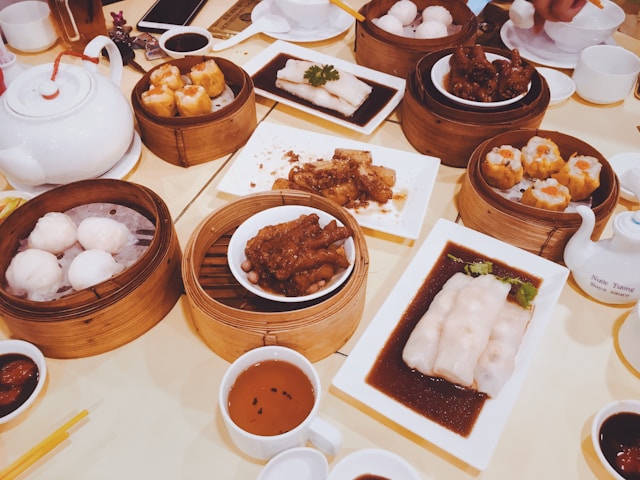
The main styles of Dim Sum house
Knowing the type of venue you are walking into manages your expectations on price, pace and polish. There is no single best kind of dim sum house; there is only the one that fits the meal you want today, and recognising the type on sight saves you from booking a special-occasion room when you wanted somewhere cheap and cheerful, or the reverse.
- Traditional teahouses: old-school, often noisy and cash-friendly, with trolleys or long printed sheets and decades of regulars. Character over comfort.
- Neighbourhood all-day restaurants: dependable, family-run Cantonese places serving dim sum into the afternoon, usually the best value in the city.
- Hotel Cantonese restaurants: smarter rooms, harbour views and refined versions of the classics, at a premium. Many of the city’s hotels run a strong weekend service.
- Fine-dining and Michelin kitchens: precise, beautiful and pricey, built for a special meal rather than a casual brunch, and often requiring a booking well ahead.
- Modern and creative specialists: design-led rooms reinventing the classics, popular with a younger crowd and worth it when the kitchen has substance behind the styling.
What separates a great Dim Sum house from an average one
Once you can read the menu and the room, judge the kitchen. A handful of signals tell you more than any star rating.
- Turnover and crowds: a full room of local families, especially older regulars, is the single most reliable sign, and high turnover means fresher dumplings.
- Made to order: kitchens that cook on demand beat those holding trays under heat lamps, and an order sheet is a good clue.
- The steamed test: if the har gow skin is thin but not gummy and the filling tastes clean and sweet, the kitchen has real skill.
- The tea: a place that takes its tea seriously, offering a proper choice and changing the water without being asked, usually takes the rest seriously too.
- Timing: dim sum is traditionally a late-morning to mid-afternoon meal, and the freshest service is often earlier rather than later.
Consistency is the quiet test that lists rarely capture. A kitchen that nails the same three dishes every visit, on a Tuesday as much as a Sunday, is worth more than one that dazzles once and disappoints the next time. If a place becomes a favourite, order a familiar dish alongside something new each visit, and you will quickly learn whether the standard holds.
Dim Sum by district
Where you eat shapes the experience as much as what you order. A quick tour of the city’s dim sum geography, before you browse by district across Hong Kong:
- Central and Sheung Wan: the widest range, from old-school teahouses to polished, design-led rooms and a cluster of Michelin names. Expect higher prices and weekend queues.
- Tsim Sha Tsui: hotel dim sum with harbour views sits alongside busy, mid-range Cantonese restaurants, so it is a good area if you want a view with your dumplings.
- Mong Kok, Jordan and Yau Ma Tei: dense, lively and better value, with long-running local favourites and few concessions to tourists.
- Causeway Bay and Wan Chai: a broad mix of reliable, family-friendly halls and trend-driven newcomers.
- The neighbourhoods and new towns: the everyday teahouses where Hong Kong actually eats, often the warmest welcome and the keenest prices.
If you would rather a gentler pace or an afternoon-tea alternative, the city’s tea houses and cafés list plenty of options for a quieter sit-down.
When to go, and how long to linger
Timing is part of choosing well. Dim sum is traditionally a daytime meal, served from mid-morning into the afternoon, and the rhythm matters. Weekend mornings are the classic slot, when families gather for a long, unhurried yum cha that can stretch well past two hours, but they are also the busiest, so popular halls fill quickly and queues build by late morning. If you can, go on a weekday, or arrive as service opens, when the kitchen is fresh and a table is easy to come by.
Treat the meal as a social occasion rather than a quick refuel. Order in waves rather than all at once, let the table catch up between rounds, and keep the tea topped up throughout. A good yum cha is as much about the conversation and the second pot of tea as it is about the food, and rushing it rather misses the point of the whole tradition.
If your window is short, choose the format to match. An order-sheet shop at an off-peak hour will feed you quickly and well, while a trolley hall at Sunday noon is a commitment of time as much as appetite. Match the venue to the clock, and you will avoid the most common dim sum disappointment, which is a rushed meal in a room built for lingering.
What it costs and how the pricing works
Dim sum pricing follows a simple logic once you see it. Dishes are usually graded by size, small, medium, large and special, and your bill is the sum of those baskets plus a per-head tea charge and, in smarter places, a service charge. That structure is why the same meal can cost very different amounts depending on where you sit.
As a rough guide, a neighbourhood teahouse is an everyday treat, a hotel dining room is a weekend splurge, and a Michelin room is a special occasion. Rather than chase exact figures, which move with the seasons and the venue, decide which of those three bands you are in before you go, and order to match. A table of four sharing generously will always eat better, and often cheaper per head, than two people ordering cautiously. Watch for the small extras, too: the per-head tea charge, a service charge in smarter rooms, and the token cost of the pickles and peanuts that arrive at the table unasked.
What to check before you book
- Hours: confirm the dim sum service times, as many kitchens stop mid-afternoon.
- Reservations: weekend mornings book out, and some Michelin spots take bookings well ahead, so walk-ins may face long waits.
- Group size: dim sum rewards a table of four to six, so you can try more dishes, though order-sheet places happily seat solo diners.
- Dietary needs: vegetarian, halal and allergy-friendly options vary widely, so call ahead if it matters.
- Payment and service: smaller, cash-only shops still exist, and tea and a per-head service charge are usually added to the bill.
- Language: a photo menu or an English order sheet makes life easier if your Cantonese is limited.
An honest word on hype and ‘best’ lists
Be wary of ranked lists, including the ones sitting at the top of your search results. Dim sum kitchens rise and fall with their head chef, and a place that was a sure thing two years ago may be coasting today. Viral fame is the bigger trap: the most photographed baskets are not always the best, and the queue outside often reflects social media more than the food. Your own checklist, a full local room, fresh steamed classics, and tea that someone clearly cares about, will serve you better than any headline. Treat lists as a starting point, then trust what is in front of you.
Find your next Dim Sum spot
Choosing dim sum in Hong Kong comes down to a few habits: read the menu, watch the room, match the style to the occasion, and check the practicalities before you go. Do that, and you will eat well whether you are in a trolley-service institution or a quiet neighbourhood shop. When you are ready to choose, browse Cantonese and dim sum restaurants by district to see what is open and well rated near you, and if you are planning a bigger outing, our guide to choosing the right day out in Hong Kong pairs nicely with a long, lazy yum cha. Run a restaurant yourself? You can add or claim your listing so local diners can find you.
