



What Is Yum Cha?
Yum cha means “drink tea” in Cantonese, but the words cover a whole meal. You sit down with a pot of Chinese tea, usually pu-erh, and order small dishes of dim sum: shrimp dumplings, pork buns, rice noodle rolls, egg tarts, and dozens more. Each dish comes in a small basket or plate meant for sharing. At older restaurants, staff push trolleys of hot dim sum between the tables and you point at what you want. Most places now use a paper checklist instead. A full meal at a local teahouse costs around HK$120 to HK$200 for two people.
Why Hong Kong Loves Yum Cha
Yum cha is less about the food and more about the time around the table. Families use it as their weekly catch-up, often on a Saturday or Sunday morning, with three generations sharing one big round table. Retired people treat it as a daily routine: one pot of tea, a couple of dishes, and a newspaper that lasts two hours. Friends use it too. In Cantonese, “let’s go yum cha some time” is a common way to say goodbye, even when no date is set.
For more Cantonese restaurants and cafés near you, browse the listings on Advertise.hk.
The habit runs deep because it started as a working-class meal. Old teahouses served “one pot, two items” a pot of tea and two dim sum as a cheap, quick breakfast for labourers. That history still shows. Yum cha stays affordable, unhurried, and open to everyone, which is why a dim sum hall on a Sunday holds toddlers, grandparents, and office workers at the same shared tables.
Best yum cha in Hong Kong Island
Lin Heung Lau (Sheung Wan)
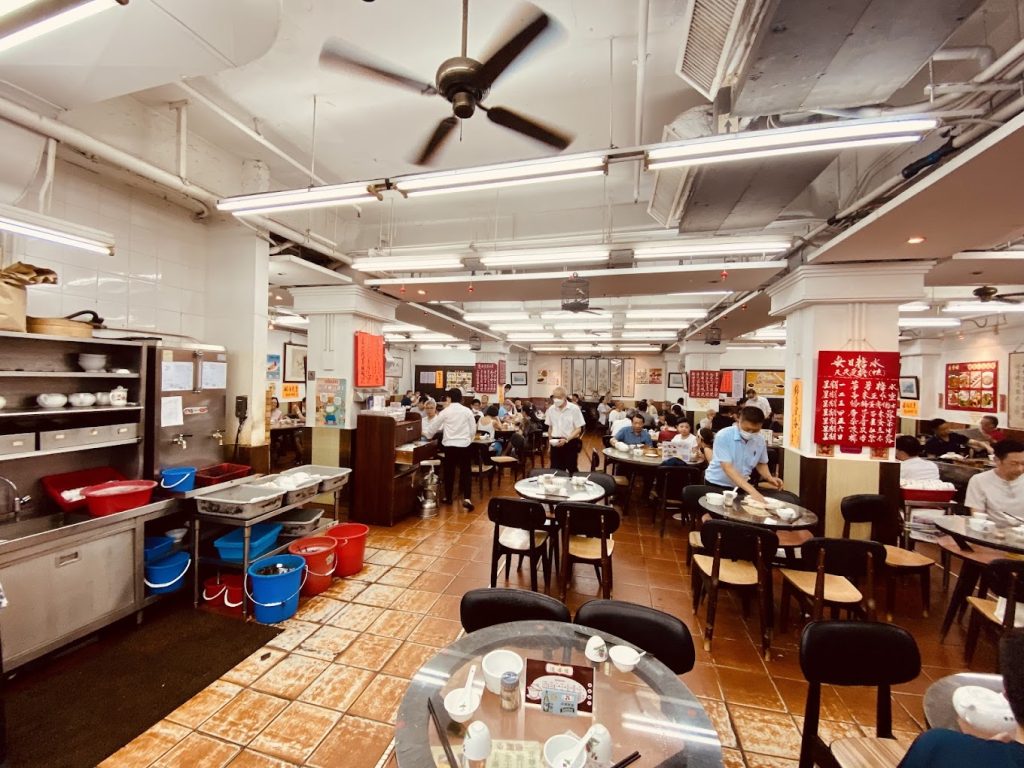
A self-service teahouse that runs like it did fifty years ago.
You find your own seat, rinse your own cups with hot tea, and collect dim sum straight from the counter as trays come out of the kitchen. It opens at 6am, and that is the time to go, when the room is full of locals reading newspapers instead of tourists. Expect shared tables, noise, and some of the widest dim sum variety in the city.
Luk Yu Tea House (Central)
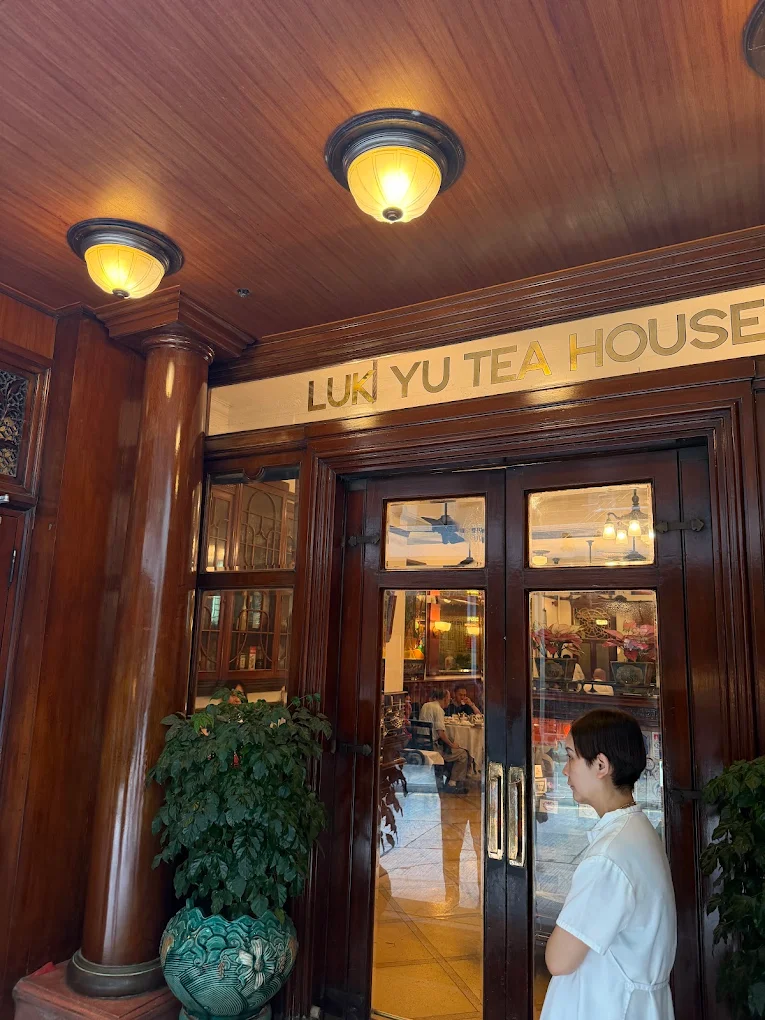
A working teahouse from 1933, still in its original building on Stanley Street.
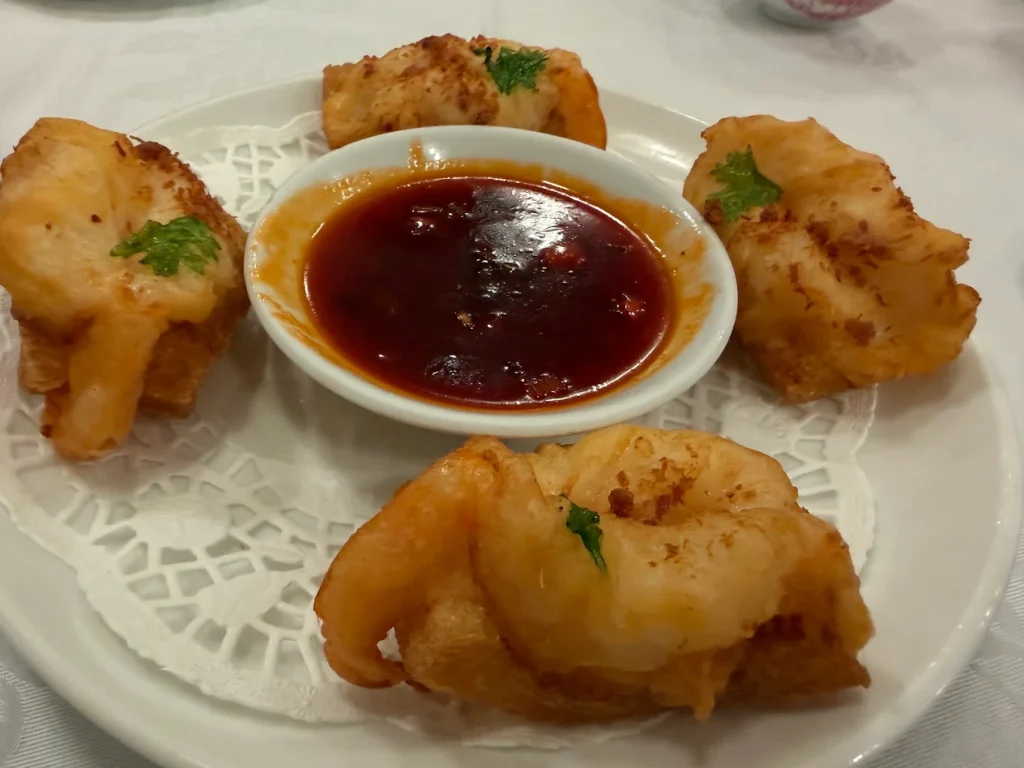
Dark wood, ceiling fans, and waiters in traditional white jackets set the scene, but people come back for the food. The menu keeps rare, labour-heavy items you rarely see now, like pork liver siu mai and chicken buns, and the custard tarts have a light, flaky crust. Prices run higher than a neighbourhood spot. Come for a slower, old-style yum cha rather than a quick bite.
Maxim’s Palace (City Hall, Central)
The grand trolley-service hall most visitors picture when they think of yum cha.
Chandeliers, harbour views, and carts of steaming baskets rolling between hundreds of tables. There are no bookings, so on a Sunday you take a queue ticket around 10am and wait your turn. The siu mai, spring rolls, and beancurd rolls draw the most praise. It is loud and busy, and that is the point.
Address: 2/F, Low Block, City Hall, 5-7 Edinburgh Place, Central, Hong Kong
Phone: +852 2521 1303
Sun Hing Restaurant (Kennedy Town)
A cramped, chaotic dim sum shop that opens at 3am.
Sun Hing has served night-shift workers, students, and jet-lagged travellers for decades. You share tables, sit on plastic stools, and pay cash. The salted duck egg custard buns are the dish people cross the city for, and the siu mai comes topped with quail egg. It is the opposite of polished, which is exactly why people love it.
Sun Hing Restaurant is located at:
Shop C, G/F, Markfield Building, 8 Smithfield Road, Kennedy Town, Western District, Hong Kong
Phone: +852 2816 0616
It’s about a 3-minute walk from Exit B of Kennedy Town MTR station, known for its early hours (roughly 3am–4pm) and old-school, self-service dim sum style.
YUM CHA (Central)
The modern take: dim sum shaped like pigs, birds, and cartoon faces.
The BBQ pork buns come with piggy ears and the custard buns ooze when you bite them. It sounds like a gimmick, but the cooking holds up, and the room is spacious enough for family groups. Book ahead on chope.com, since lunch fills quickly. Good pick if you are bringing kids or anyone new to dim sum.
Yum Cha (Central) is located at:
Shop 1-2, 2/F, Nan Fung Place (Nan Fung Tower), 173 Des Voeux Road Central, Central, Hong Kong
Phone: +852 3541 9710
It’s about a 2-minute walk from Exit E3 of Sheung Wan MTR station, note it sits right on the Central/Sheung Wan border, so some listings describe it as “Sheung Wan” rather than strictly “Central.”
Kowloon
Kowloon covers the full spread, from the cheapest Michelin-recognised meal in the world to hotel dining rooms. Distances are short here, so you can reach any of these within 15 minutes on the MTR.
Tim Ho Wan (Sham Shui Po)
The original branch of the dim sum shop that made Michelin affordable.
A full meal here runs about HK$120–155 a head, and the baked BBQ pork buns remain the reason to queue. Everything is steamed to order from a menu of over 20 items, so dishes arrive hot rather than sitting in a warmer. Weekend waits can hit 30 to 60 minutes; the Sham Shui Po branch tends to be calmer than Mong Kok. Skip the airport branch.
Tim Ho Wan (Sham Shui Po) is located at:
G/F, 9-11 Fuk Wing Street, Sham Shui Po, Kowloon
Phone: +852 2788 1226
It’s about a 6-minute walk from Exit B2 of Sham Shui Po MTR station (also accessible from Prince Edward station, Exit E). This is the one-Michelin-star branch and one of the chain’s oldest surviving locations.
One Dim Sum (Prince Edward)
A small neighbourhood shop with big portions at low prices.
Items start around HK$21, and the har gow is the dish reviewers keep naming as the best on the table. Portions run larger than most places, so order less than you think you need. It opens at 9:30am on weekdays and gets queues at lunch, but turnover is fast. Good first stop if you are staying around Mong Kok.
Let’s Yum Cha (Mong Kok)
Traditional dim sum with playful extras, open from 7am.
The steamed classics hold up: juicy siu mai, big har gow, and a strong char siu bao. What sets it apart is the dessert end of the menu, with taro custard balls, black molten custard buns, and mochi shaped like mice. Prices are low, the room is small, and it fills up quickly at breakfast on weekends.
Let’s Yum Cha (Mong Kok) is located at:
G/F, 7B Playing Field Road, Prince Edward, Mong Kok, Hong Kong
Phone: +852 2398 3183
Note it’s technically closer to Prince Edward (often listed under that neighborhood), but it’s commonly grouped under Mong Kok. Open daily 7:00 AM–11:00 PM, and it doesn’t take reservations, so it’s best to arrive early or during off-peak hours.
Spring Moon (Tsim Sha Tsui)
The formal option, inside The Peninsula hotel.
This is dim sum as fine dining: shrimp dumplings with bamboo shoot, steamed lobster dumplings, and baked turnip puffs shaped like swans, served in a 1920s-style dining room. Lunch runs 11:30am to 2:30pm and tables go fast, so book ahead. Come here for a celebration or a slow lunch rather than an everyday yum cha.
Spring Moon is located at:
1/F, The Peninsula Hong Kong, 22 Salisbury Road, Tsim Sha Tsui, Kowloon
Phone: +852 2696 6760
It’s the Michelin-starred Cantonese restaurant inside The Peninsula Hotel, known for its 1920s Shanghai-style art deco decor and extensive tea selection.
Best yum cha in the New Territories
The New Territories is where yum cha still feels like a neighbourhood habit rather than an outing. Tuen Mun’s five picks are covered in their own section earlier; here are the other towns worth planning around.
Tuen Kee / Duen Kee (Chuen Lung, Tsuen Wan)
A self-service village teahouse at the foot of Tai Mo Shan.
You make your own tea, collect your own baskets from the counter, and find a seat, indoors or out with a mountain view. Dim sum costs around HK$20–30 a plate, and the steamed watercress, grown in the village, is the dish to watch for; it sells out fast. Hikers coming down from Tai Mo Shan fill it on weekend mornings. It opens at 6am, closes at 2pm, and is shut Mondays. About 15 minutes by bus from Tsuen Wan MTR.
Tuen Kee / Duen Kee (端記茶樓) is located at:
57-58 Chuen Lung Estate, Route Twisk, Tsuen Wan, New Territories, Hong Kong
Phone: +852 2490 5246
It’s a rustic, self-service tea house at the base of Tai Mo Shan, no table service, cash only, open daily 6:00 AM–2:00 PM. It’s reachable via green minibus No. 80 from Chuen Lung Street in Tsuen Wan (about a 15-minute ride, then a 1-minute walk), or roughly a 35-minute taxi ride from the city.
Tim Ho Wan (Sha Tin)
The New Town Plaza branch, and one of the best-rated in the chain.
Same menu as Sham Shui Po: baked BBQ pork buns, glutinous rice, pork rice rolls. The mall location makes it an easy stop if you are shopping or changing trains at Sha Tin. Take a queue ticket at lunch, since waits can pass 30 minutes. Orders go through a self-service system at the table.
Tim Ho Wan (Sha Tin) is located at:
Shop 455, 4/F, New Town Plaza Phase I, 18-19 Sha Tin Centre Street, Sha Tin, New Territories
Phone: +852 2385 0955
It’s accessible via Exit A3 of Sha Tin MTR station, inside the New Town Plaza shopping mall.
Old Fung Tea House (Tai Po)
A 1970s-themed teahouse in the middle of Tai Po.
The room is done up in vintage Hong Kong style, but the food is the reason locals keep it busy: fresh, hot dim sum at around HK$80 a head. The steamed sponge cake gets named again and again in reviews. Go on a weekday if you can. Ying Dim, a newer dim sum shop on the same street, is a solid backup if the queue is long.
Old Fung Tea House (老馮茶居), Tai Po branch, is located at:
Shop 14, G/F, Treasure Garden (海寶花園), 1 On Chee Road, Tai Po, New Territories
Phone: +852 2388 0798
It’s a retro-themed Cantonese dim sum tea house known for its nostalgic 1960s Hong Kong decor, open daily from 7:30 AM, with queues common on weekends.
Let’s Yum Cha (Yuen Long)
Made-to-order dim sum from 6:30am in Yuen Long’s old town.
Dishes come out of the steamer fast, and prices sit at the cheap end for Hong Kong. The shrimp dumplings and siu mai are the regular orders, along with a deep-fried dough rice roll that regulars rate. It packs out by early evening, so mid-afternoon is the quiet window. There is also a popular Mong Kok branch if you are Kowloon-side.
Let’s Yum Cha (Yuen Long) is located at:
G/F, Kit Man House, 13 Kuk Ting Street, Yuen Long, New Territories
Phone: +852 2614 8828
It’s about an 8-minute walk from Exit A of Yuen Long MTR station, open daily from 6:30 AM to 11:30 PM.
Le Vow (Tai Po Kau)
Dim sum with a lake view, near the Chinese University.
The dining room looks out over Lai Chi Wo pond, and the menu mixes traditional and newer dim sum at higher prices, around HK$75 a plate. People come for a slow lunch and the setting as much as the food. Book for both lunch and dinner, and plan your transport, since taxis can be slow to reach it.
Le Vow (金鷺湖) is located at:
Shop A, G/F, Kerry Lake Egret Nature Park (Lake House), 2 Hung Lam Drive, Tai Po Kau, Tai Po, New Territories
Phone: +852 2657 6610
It’s a picturesque, European-style building overlooking the lake at the Lake Egret nature park, a modern Cantonese restaurant known for creative dim sum and a popular wedding venue. Reservations are recommended, and free parking is available.
