



Hong Kong is one of the most densely starred cities on earth. The most recent Michelin Guide Hong Kong Macau, announced in March 2026, awards stars to 77 restaurants in Hong Kong alone: seven with three stars, thirteen with two, and fifty-seven with one. For a city of this size, that is an extraordinary concentration of kitchens operating at the top of their craft.
What makes Hong Kong unusual is not the count but the range. The same guide that recognises a HK$5,000 tasting menu also recognises a roast goose counter where you eat over rice at a shared table for under a hundred dollars. This guide explains how the system works, lists the three-star restaurants in full, and picks out the starred places worth knowing across every price point. For more places to eat, browse our directory of restaurants in Hong Kong.
Beyond the Michelin list, browse our directory of Hong Kong restaurants, cafés and bars.
How the Michelin system actually works
The stars are awarded for the food on the plate and nothing else. Decor, service and comfort are rated separately and do not affect the star count, which is why a stall with plastic stools can hold one and a lavish dining room can hold none.
Alongside the stars sit two other distinctions that are frequently confused with them. The Bib Gourmand recognises good cooking at moderate prices and is not a star, though it is a genuinely useful shortlist for eating well cheaply. The Green Star recognises sustainability and can only go to a restaurant that already holds another Michelin distinction. Hong Kong currently has around seventy Bib Gourmand restaurants and four Green Stars.
- One star: a very good restaurant in its category, worth a stop
- Two stars: excellent cooking, worth a detour
- Three stars: exceptional cuisine, worth a special journey
- Bib Gourmand: good quality at moderate prices, and not a star
- Green Star: a sustainability distinction, awarded alongside an existing one
The three-star restaurants, in full
Seven Hong Kong restaurants hold the maximum three stars in the current guide. Between them they cover Italian, French, modern European, Cantonese, Japanese and French-Japanese cooking, which is a fair summary of the city’s appetite.
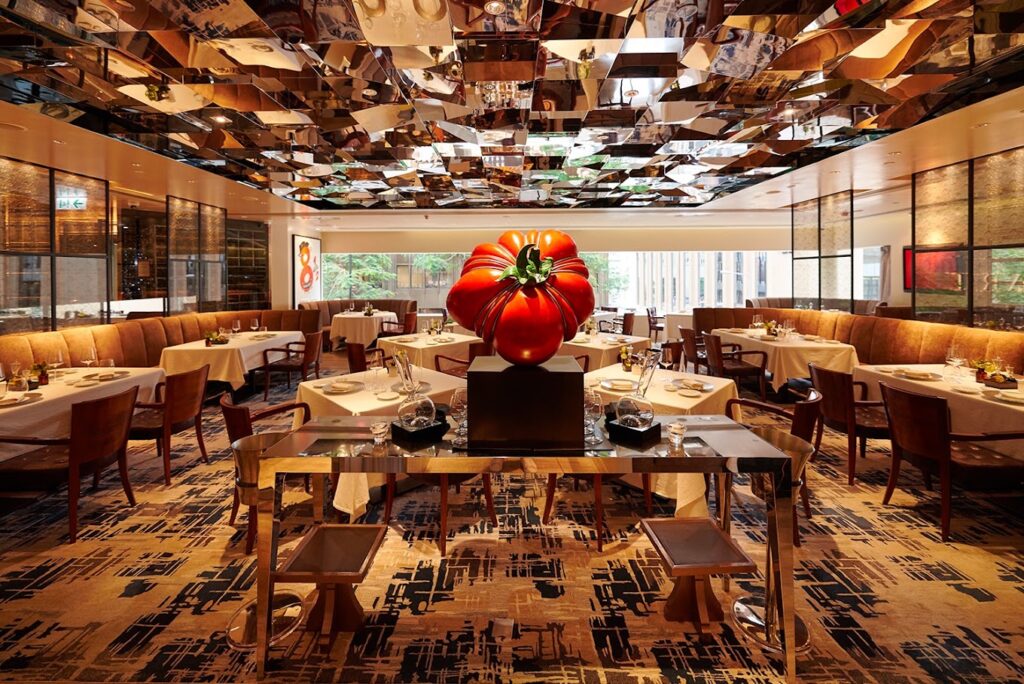
8 1/2 Otto e Mezzo Bombana
Chef Umberto Bombana’s Italian restaurant remains the only three-star Italian kitchen outside Italy, and it has held the rank for years. It is built around handmade pasta, exceptional produce and, in season, a serious white truffle programme. Formal, expensive and very good.
Address: Shop 202, 2/F, Landmark Alexandra, 18 Chater Road, Central | Nearest MTR: Central | Typical spend: tasting menus, high
Good to know: Come in white truffle season if the budget allows; it is what the kitchen is famous for.
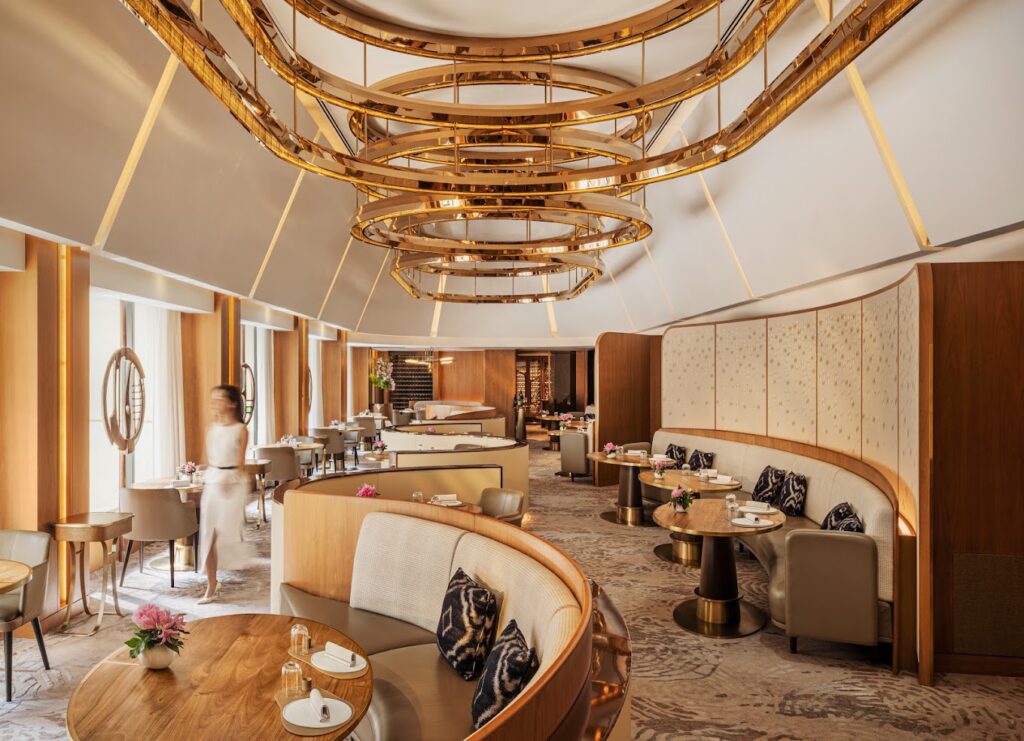
Amber
Richard Ekkebus’s modern European restaurant was promoted to three stars in 2025 after sixteen years at two, and it also holds a Green Star for sustainability. The cooking is dairy-free by design, produce-led and technically immaculate. It reopened in mid-2026 after a refit.
Address: 7/F, Mandarin Oriental The Landmark, 15 Queen’s Road Central, Central | Nearest MTR: Central | Typical spend: set lunch from around HK$998; dinner tasting from around HK$2,058
Good to know: The set lunch is the most affordable route into a three-star kitchen in this city.
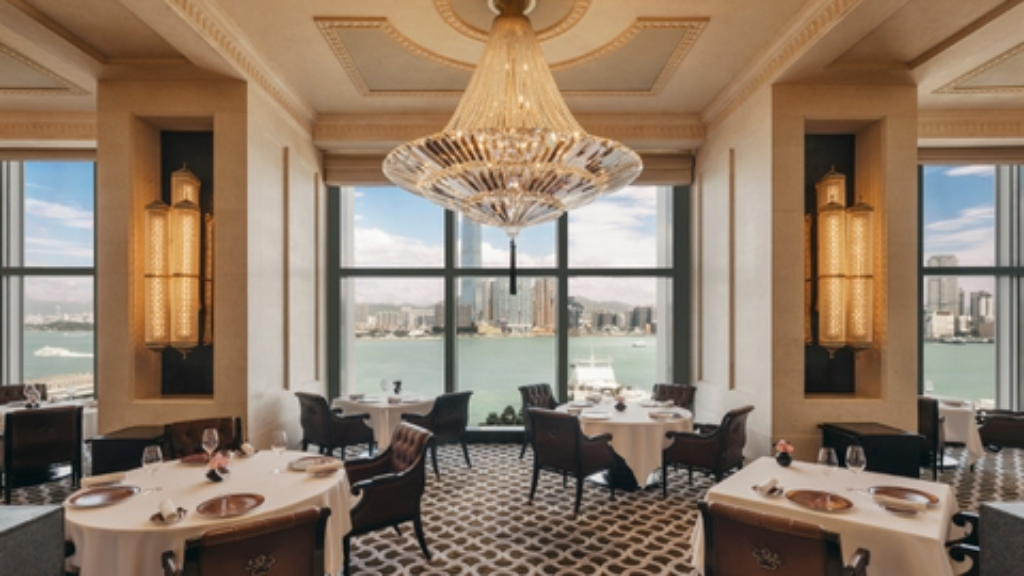
Caprice
Classic French cooking at the Four Seasons with a celebrated cheese trolley, a formidable wine list and harbour views from the dining room. The 2026 guide gave its sommelier award to Caprice, which tells you where the strength lies alongside the kitchen.
Address: Podium 6, Four Seasons Hotel, 8 Finance Street, Central | Nearest MTR: Hong Kong Station | Typical spend: set lunch around HK$1,288; dinner tasting from around HK$3,128
Good to know: Ask about the cheese trolley; it is one of the best in Asia.
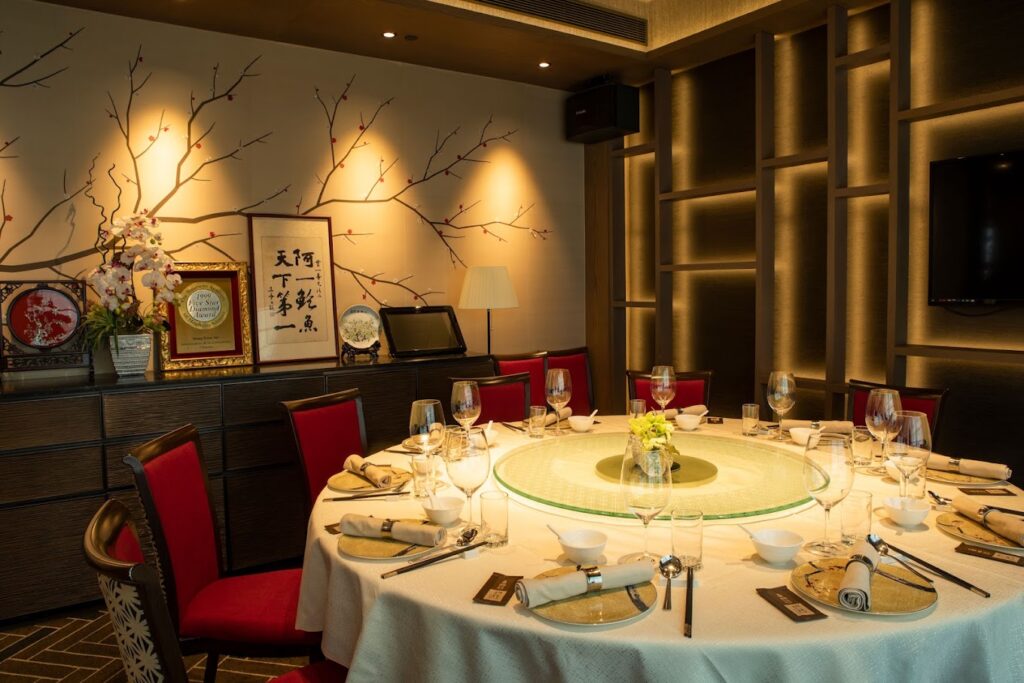
Forum
A Cantonese institution founded in 1974 by the late chef known as the Abalone King, and still famous above all for slow-braised abalone served whole. The kitchen has held its three stars under his successors. This is old-school Cantonese luxury at its most serious.
Address: Sino Plaza, 255 to 257 Gloucester Road, Causeway Bay | Nearest MTR: Causeway Bay | Typical spend: abalone set menus from around HK$2,180
Good to know: The abalone is the whole point, and it is priced accordingly.
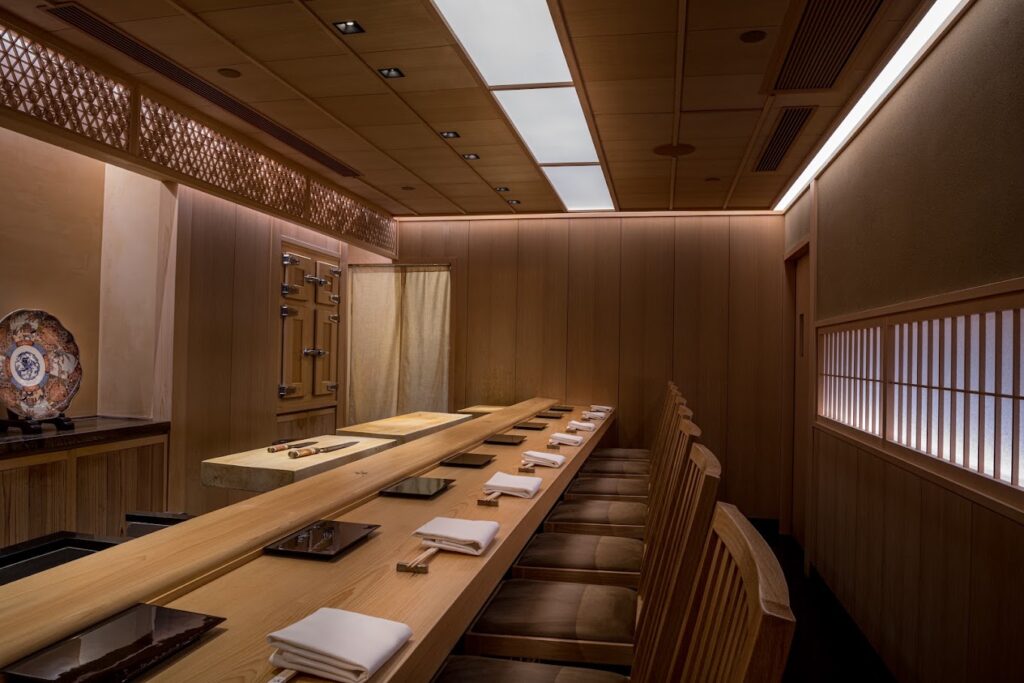
Sushi Shikon
An eight-seat hinoki counter serving Edomae sushi, which has held three stars every year since 2014. It is intimate, exacting and books out well in advance. One of the hardest reservations in Hong Kong.
Address: 7/F, The Landmark Mandarin Oriental, 15 Queen’s Road Central, Central | Nearest MTR: Central | Typical spend: lunch omakase around HK$2,250; dinner around HK$4,000
Good to know: Lunch is substantially cheaper than dinner for the same counter.
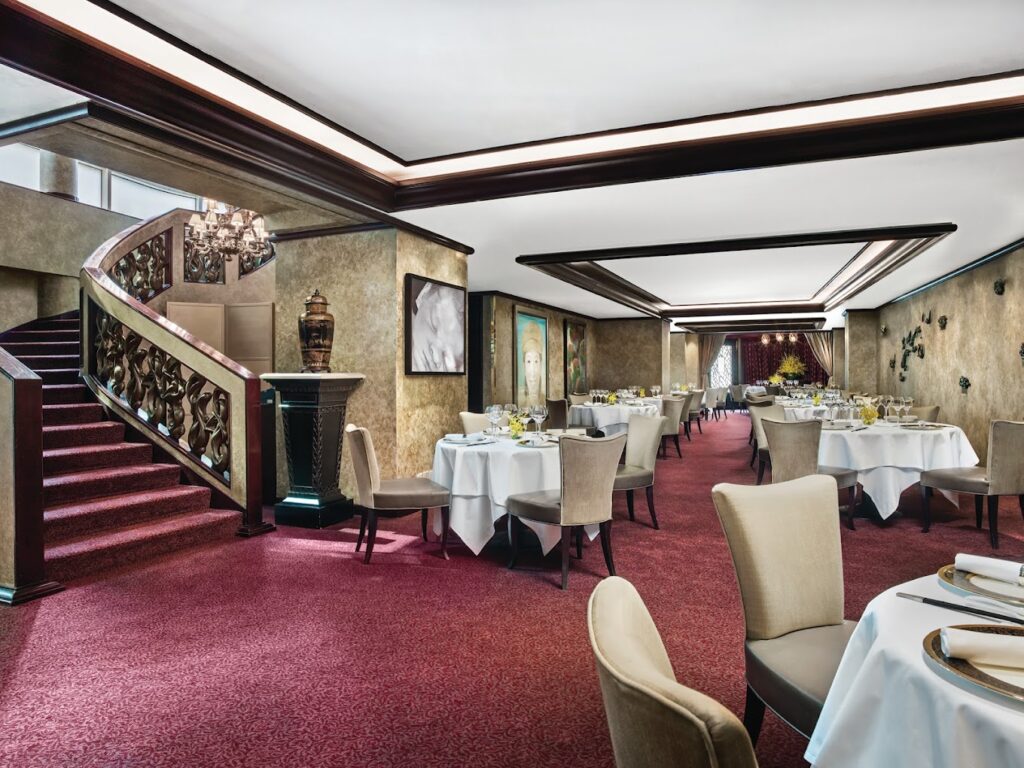
T’ang Court
The Cantonese restaurant at The Langham in Tsim Sha Tsui, holding three stars for its roast suckling pig, barbecued pork and double-boiled soups. Rich, traditional and beautifully executed, in a room that feels properly grand.
Address: 1 to 2/F, The Langham, 8 Peking Road, Tsim Sha Tsui | Nearest MTR: Tsim Sha Tsui | Typical spend: dinner tasting around HK$3,280; set lunches cheaper
Good to know: The Kowloon-side option if you would rather not cross the harbour for a three-star meal.
Ta Vie
Chef Hideaki Sato threads Japanese ingredients through French technique across a single seasonal tasting menu, promoted to three stars in 2023. It is understated where the others are grand, and all the better for it.
Address: 2/F, The Pottinger, 74 Queen’s Road Central, Central | Nearest MTR: Central | Typical spend: tasting menu around HK$2,980
Good to know: Dinner only and closed Wednesdays, with one menu and no substitutions.
Two stars worth knowing
Lung King Heen
The Four Seasons’ Cantonese room made history in 2009 as the first Chinese restaurant anywhere to win three stars, and held them for fourteen years before dropping to two in 2023, where it remains. A great many articles still describe it as three-star, so be aware. It is still exceptional, particularly at dim sum lunch.
Address: 4/F, Four Seasons Hotel, 8 Finance Street, Central | Nearest MTR: Hong Kong Station | Typical spend: dim sum lunch with a minimum spend from around HK$700
Good to know: Lunch dim sum with a harbour view is the reason to book.
Ying Jee Club
A refined Cantonese restaurant in Central holding two stars, offering multi-course tasting menus at both lunch and dinner. It is polished without being stiff, and considerably easier to book than the three-star rooms.
Address: Nexxus Building, 41 Connaught Road, Central | Nearest MTR: Central | Typical spend: tasting menus from around HK$1,580
Good to know: A strong two-star alternative when the three-star diaries are full.
Starred dining without the bill
This is what makes Hong Kong genuinely unusual. Two roast meat shops hold Michelin stars while serving a full meal for well under a hundred dollars, with shared tables and no reservations.
Yat Lok
A one-star roast goose shop trading since 1957, at its Stanley Street address since 2011 and starred every year since 2015. A drumstick over rice costs less than a cocktail in the bar round the corner. Cramped, fast and completely unbothered by its own fame.
Address: G/F, 34 to 38 Stanley Street, Central | Nearest MTR: Central | Typical spend: goose over rice from around HK$88
Good to know: The cheapest Michelin star you will ever eat, and worth the shared table.
Kam’s Roast Goose
Run by a member of the family behind the old Yung Kee dynasty, and one-starred since it opened. The goose has lacquered skin and juicy meat, and a full meal generally comes in under HK$150. Expect a queue at lunch.
Address: G/F, Po Wah Commercial Centre, 226 Hennessy Road, Wan Chai | Nearest MTR: Wan Chai | Typical spend: under around HK$150 a head
Good to know: Arrive just before opening to skip the worst of the queue.
Yardbird
Matt Abergel’s yakitori izakaya holds a star for grilling every part of the chicken over binchotan charcoal, with a strong sake and highball list to go with it. It is loud, informal and much cheaper than the fine-dining rooms.
Address: 154 to 158 Wing Lok Street, Sheung Wan | Nearest MTR: Sheung Wan | Typical spend: roughly HK$400 to 600 a head
Good to know: Let the counter guide the order rather than working through the menu yourself.
One stars across the city
The Chairman
A one-star modern Cantonese restaurant built on obsessive local sourcing, with its own farm and a network of small suppliers. The steamed flowery crab with aged Shaoxing wine is the dish everyone talks about. It moved to Wellington Street in 2022, so older addresses are wrong.
Address: 3/F, The Wellington, 198 Wellington Street, Central | Nearest MTR: Central | Typical spend: tasting menus, high
Good to know: Reservations open on a rolling basis and go quickly, so plan well ahead.
Whey
Chef Barry Quek’s modern European cooking, threaded through with Singaporean and Malaysian flavours, on a seven-course tasting menu. It is one of the more distinctive one-star kitchens in the city and sits in the same building as The Chairman.
Address: UG/F, The Wellington, 198 Wellington Street, Central | Nearest MTR: Central | Typical spend: tasting menu format
Good to know: A good choice if you want something less conventional than classic French or Cantonese.
Ando
Chef Agustin Balbi’s one-star restaurant blends Spanish and Japanese cooking with an Argentinian sensibility, and it has become one of the most talked-about tables in Central. Set lunch is a considerably gentler introduction than dinner.
Address: 52 Wellington Street, Central | Nearest MTR: Central | Typical spend: lunch from around HK$688; dinner from around HK$1,588
Good to know: Book the lunch if you want the cooking without the full dinner outlay.
What changed in the latest guide
Stars move every year, and the 2026 edition brought several changes worth knowing before you book on the strength of an old article. China Tang and Sushi Takeshi both gained their first star. Cristal Room by Anne-Sophie Pic was promoted from one star to two. L’Atelier de Joel Robuchon returned to the guide at two stars after reopening. Sushi Saito lost its star.
Two corrections come up constantly online. Lung King Heen has held two stars, not three, since 2023. And Tim Ho Wan, forever described as the world’s cheapest Michelin-starred meal, no longer holds a star at all: its Sham Shui Po branch is now a Bib Gourmand restaurant. It is still excellent value and still worth your time, but the famous line about it is out of date.
Good to know
A few practical notes before booking:
- Stars change every March, when the new guide is announced, so check before booking on the strength of an old list.
- Set lunch is the value play: several three-star kitchens serve lunch at a fraction of the dinner price.
- Book far ahead for the three-star rooms and the sushi counters, where diaries open weeks in advance.
- Service charge: most add ten per cent, and hotel restaurants may apply a minimum spend.
- Bib Gourmand is not a star, but it is the best list in the city for eating well cheaply.
- The cheap stars have no reservations: the roast goose shops work on queueing and shared tables.
Hong Kong is one of the few cities where a Michelin star can mean a HK$5,000 tasting menu or a plate of roast goose over rice, and both are worth your time. For more places to eat, browse restaurants in Hong Kong in our directory, or plan a full day with our guide to things to do in Hong Kong.
Afterwards, the city’s independent coffee shops are the natural next stop. If you run a restaurant, list it on advertise.hk so diners can find you. Star counts, prices and opening hours all change, so confirm the current position before booking a special meal.
