



For a few Hong Kong dollars, the Star Ferry gives you the best view in the city. Green and white boats have been crossing Victoria Harbour since the nineteenth century, and the eight-minute passage between Hong Kong Island and Kowloon still ranks among the great short journeys anywhere in the world. It is a commuter service that happens to be a tourist attraction, which is precisely what makes it good.
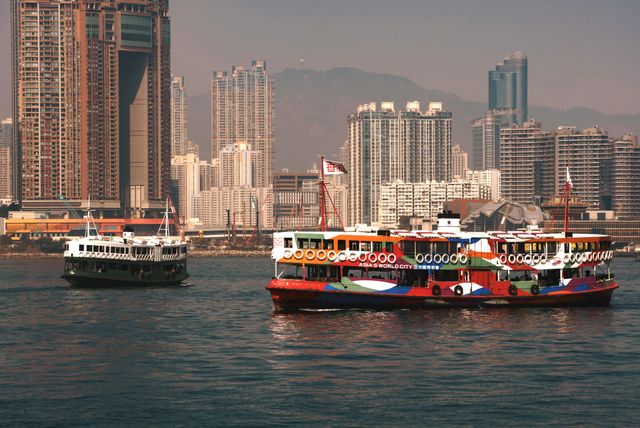
This guide covers the two routes that currently run, what they cost, where the piers are and how to reach them, plus the harbour tours and the practical details worth knowing before you board. For the wider harbour, see our guide to Victoria Harbour.
At either pier, browse local businesses in Hong Kong to plan where to go next.
A short history
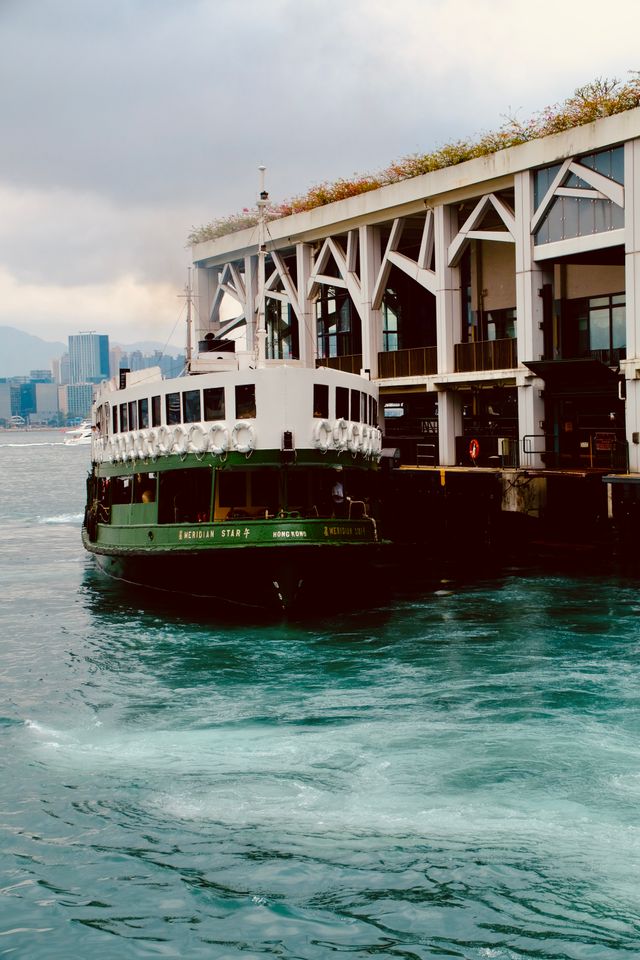
The service traces back to the 1870s and 1880s, when a Parsee businessman named Dorabjee Naorojee Mithaiwala ran a steamboat called the Morning Star across the harbour under the name of the Kowloon Ferry Company. The fleet was bought in 1898 and incorporated as the Star Ferry Company, and the naming convention stuck: every vessel since has carried Star in its name, from Celestial Star to Twinkling Star.
It has also been a barometer of public feeling. In 1966 an application to raise the first-class fare by five cents triggered a hunger strike outside the Central pier, and the protester’s arrest set off four nights of rioting across Kowloon that left one person dead and more than 1,800 arrested. The Star Ferry fare riots are still taught as a turning point in the city’s post-war history, which tells you how much the crossing matters here.
The much-loved 1957 pier at Edinburgh Place was demolished in 2006 for harbour reclamation, over considerable public protest, and the service moved to its current home at Central Pier 7, complete with a rebuilt clock tower echoing the old one. The fleet today is small and elderly, averaging around sixty years of age, and an electric vessel is on order.
The routes
Only two routes run today. The historic Hung Hom services ended in 2011 and have not returned, so ignore older guides that list them.
Central to Tsim Sha Tsui
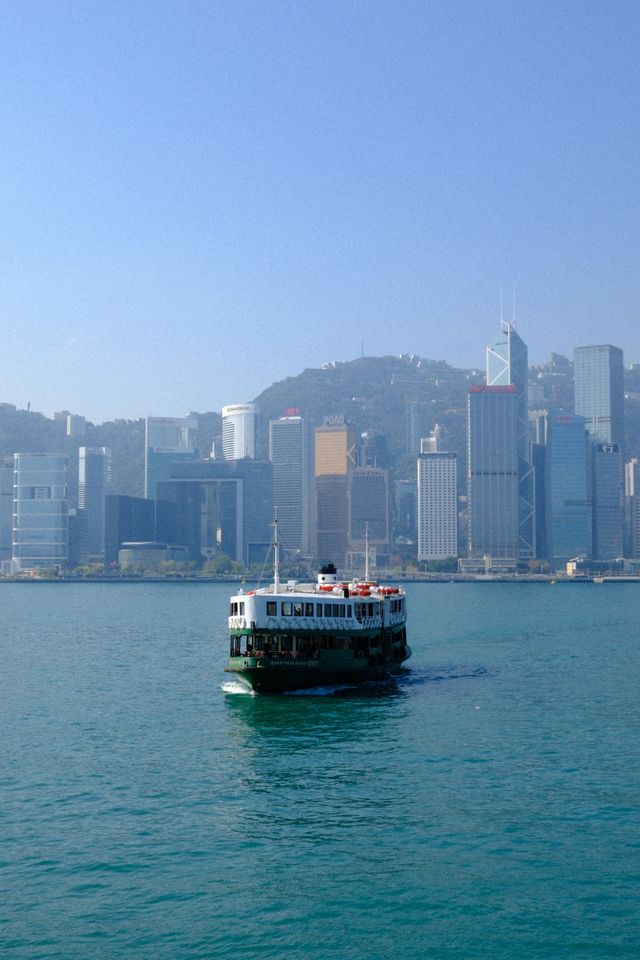
The main crossing and the one worth doing, running between Central Pier 7 and the Tsim Sha Tsui pier by the Clock Tower. It is the classic postcard route, delivering the full island skyline on the way north and the Kowloon waterfront on the way back. Boats run roughly every six to eight minutes through the day.
Where: Central Pier 7 to Tsim Sha Tsui | Hours: roughly 6.30am to 11.30pm daily | Cost: a few Hong Kong dollars
Good to know: This is the crossing to take if you only do one, and the evening run is the best of it.
Wan Chai to Tsim Sha Tsui
A quieter crossing from the pier beside the convention centre, useful if you are already on the Wan Chai harbourfront or heading for the exhibition centre. It runs less frequently and stops earlier, and the lower deck carries cargo and bicycles rather than passengers.
Where: Wan Chai pier to Tsim Sha Tsui | Hours: roughly 7.20am to 11pm; sparser at weekends | Cost: a few Hong Kong dollars
Good to know: Handy for the Golden Bauhinia Square end of the harbourfront.
What it costs
Fares are among the great bargains of Hong Kong. On the Central to Tsim Sha Tsui route an adult pays around HK$5 for the upper deck and HK$4 for the lower on weekdays, rising to about HK$6.50 and HK$5.60 at weekends and on public holidays. Children aged three to eleven, seniors over 65 and passengers with disabilities pay roughly HK$2.90 on weekdays and HK$3.90 at weekends. The Wan Chai route charges a single fare of about HK$5 on weekdays and HK$6.50 at weekends.
Children under three travel free, up to two per fare-paying adult. Octopus works at the gates on both routes, and the ticket machines also take contactless cards and the main mobile wallets. If you are over 65 and hold a personalised Octopus card, the government’s flat two-dollar concession scheme will usually beat the ferry’s own senior fare.
One important caveat. These fares have been in force since April 2023, but the operator applied in 2026 to raise them by around thirty per cent, which would push the weekday adult upper deck to roughly HK$6.50. At the time of writing the increase had not been approved. Check the current fare before you travel, particularly if you are reading this some months after publication.
- Adult, Central to Tsim Sha Tsui: around HK$5 upper deck, HK$4 lower, weekdays
- Weekends and public holidays: around HK$6.50 upper, HK$5.60 lower
- Concessions: roughly HK$2.90 weekdays, HK$3.90 weekends for children, seniors and passengers with disabilities
- Under threes: free, up to two per paying adult
- Four-day tourist pass: around HK$50 for unlimited rides on both routes
- Monthly pass: around HK$190, sold only at the Tsim Sha Tsui pier
Finding the piers
Central Pier 7
The island-side terminus on Man Kwong Street, rebuilt in 2006 with its replica clock tower. From Central station take exit A and follow the covered elevated walkway towards the harbour, roughly ten minutes. From Hong Kong station, exit A2 through the IFC mall and follow signs for the Central Ferry Piers.
Where: Man Kwong Street, Central | Nearest MTR: Central, Exit A, or Hong Kong Station, Exit A2 | Hours: first sailings from about 6.30am
Good to know: The walkway from Central station is covered the whole way, which matters in summer.
Tsim Sha Tsui pier
At the western end of Salisbury Road on Kowloon Point, beside the Clock Tower and the Cultural Centre. From Tsim Sha Tsui station follow the underground subway signs for the Star Ferry, about five minutes. East Tsim Sha Tsui connects to the same subway network but the walk is longer.
Where: Salisbury Road, Tsim Sha Tsui | Nearest MTR: Tsim Sha Tsui, following Star Ferry signs | Hours: first sailings from about 6.30am
Good to know: The promenade and Avenue of Stars start right beside the pier, so combine them.
Wan Chai pier
Next to the Convention and Exhibition Centre on the Wan Chai harbourfront. Exhibition Centre station on the East Rail Line is the closer option, connecting by footbridge; from Wan Chai station on the Island Line allow around fifteen minutes on foot via the walkways.
Where: beside the Convention and Exhibition Centre, Wan Chai | Nearest MTR: Exhibition Centre, or Wan Chai, Exit A1 | Hours: first sailings from about 7.20am
Good to know: Use Exhibition Centre station rather than Wan Chai; it is a much shorter walk.
The harbour tours
Alongside the commuter service, Star Ferry runs sightseeing cruises on the Shining Star, a double-deck replica of a 1920s ferry with an air-conditioned cabin and open sun decks. These are round trips from Tsim Sha Tsui rather than point-to-point crossings, so you return to the pier you left from.
There are usually an afternoon tour, a sunset tour and an evening tour timed so that you are on the water for the nightly harbour light show, which is the one most people want. Prices sit at roughly HK$230 for the daytime tours and around HK$280 for the evening one, with concessions available. Book ahead for the evening sailing, and note that Octopus is generally not accepted for the tours even though it works on the regular ferry.
Practical tips
Take the upper deck if you are here for the view. It costs a dollar or so more, it is covered, and it gives the cleaner sightline for photographs, particularly from the front. The lower deck is cheaper, closer to the water and breezier, and it is the only deck wheelchair users can board from, with a limit of four wheelchairs per sailing and assistance available from pier staff.
The crossing takes under ten minutes, so this is a short ride rather than a cruise. Late afternoon through to after dark is the best window, when the light softens and the towers begin to light up. If you specifically want the harbour light show at eight, take the evening water tour rather than the commuter ferry, which will not linger on the water.
Services suspend when the Observatory hoists typhoon signal eight and resume once it is lowered, which during the May to November typhoon season can happen at short notice. Crossings also run longer in rough water. Check the operator’s notices before travelling in bad weather.
- Upper deck for the view and the photographs, lower deck for the breeze and the cheaper fare
- Under ten minutes across, so plan it as a hop rather than an outing
- Late afternoon to after dark is the best time to cross
- No reserved seating, and no eating, drinking or smoking on board
- Wheelchair access is via the lower deck only, with a limit per sailing
- Typhoon signal eight suspends the service; check notices in the summer months
Good to know
A few last things before you board:
- Fares may rise: a roughly thirty per cent increase was proposed in 2026 and not yet approved at the time of writing, so check the current price.
- Only two routes run: Central and Wan Chai, both to Tsim Sha Tsui. The Hung Hom services ended in 2011.
- Octopus works on the commuter crossings, but generally not on the harbour tours.
- Seniors: the government’s flat two-dollar fare scheme usually beats the ferry’s own concession.
- Sit at the front of the upper deck heading north for the best skyline shot.
- Combine it with the Tsim Sha Tsui promenade, which begins at the Kowloon pier.
The Star Ferry remains the cheapest good thing in Hong Kong, and no visit is complete without at least one crossing. For more around the water, see our guide to Victoria Harbour and the wider list of things to do in Hong Kong.
Either side of the harbour you will find plenty of restaurants and coffee shops for before or after. If you run a harbour cruise or waterfront business, list it on advertise.hk. Fares and timetables change, so confirm the latest before you travel.
